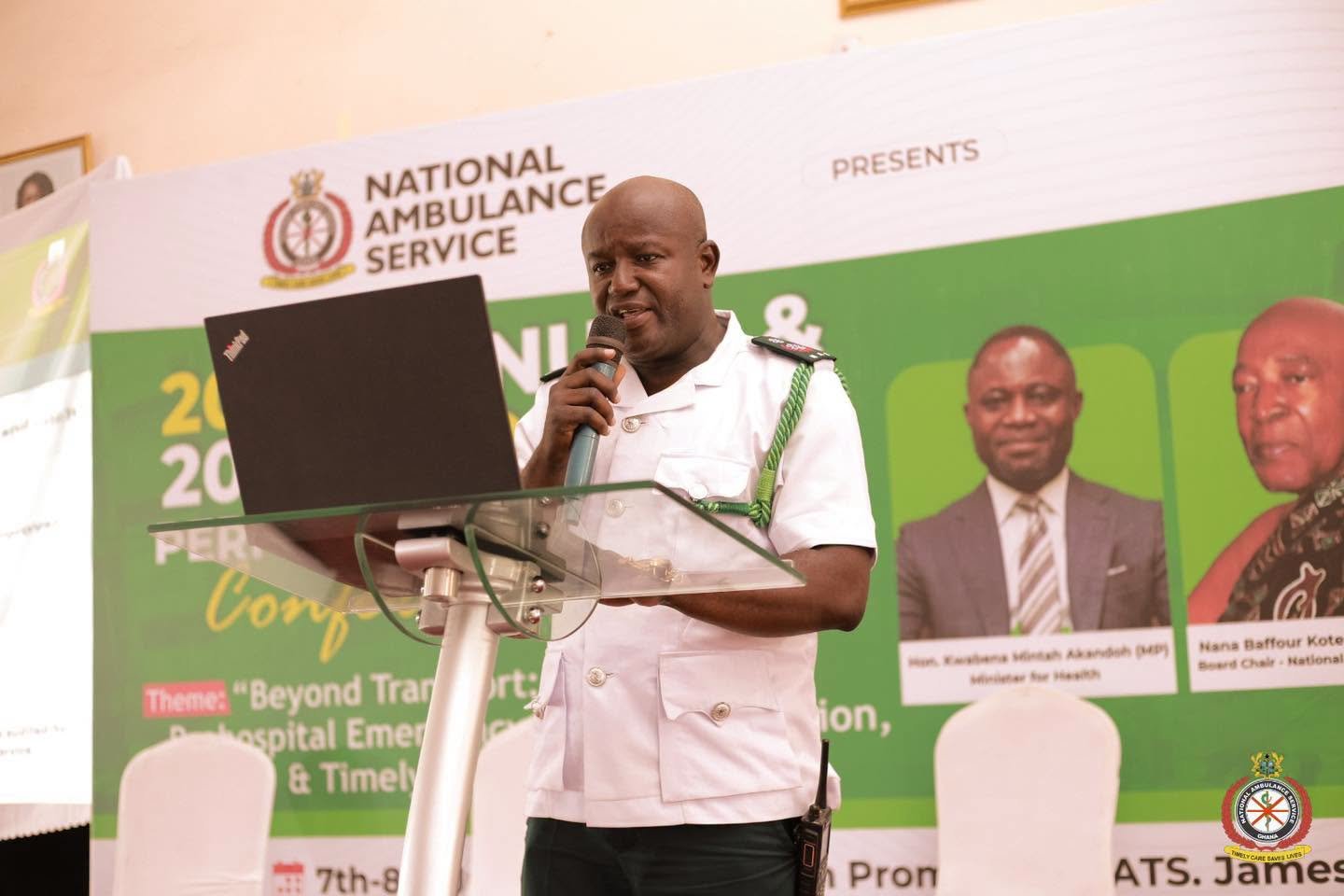
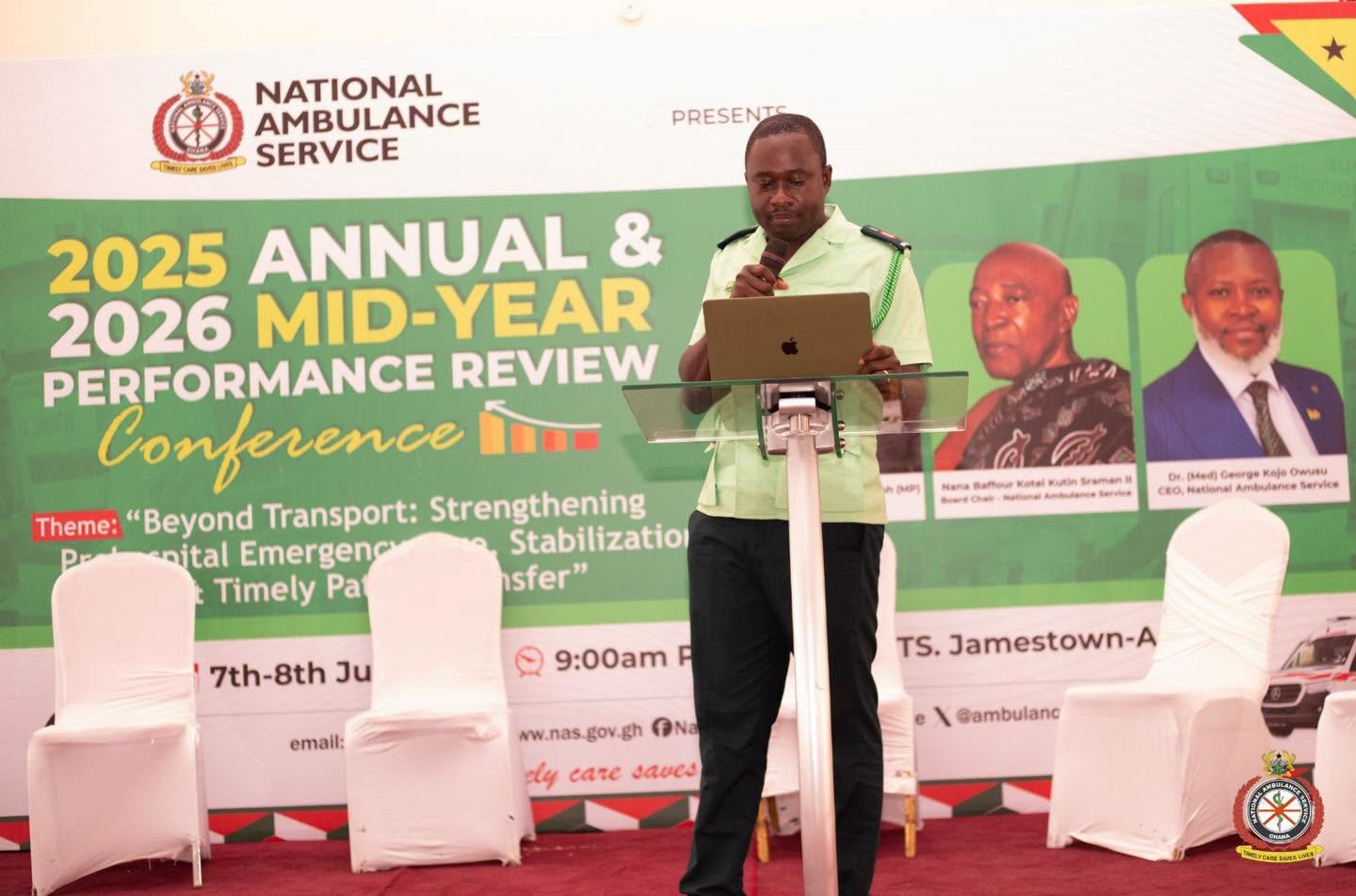
Regional Administrators of the National Ambulance Service (NAS) have identified key operational, logistical, administrative, and human resource challenges affecting the delivery of pre-hospital emergency medical services across the country during the Service's 2025 Annual Performance Review and 2026 Mid-Year Performance Review Conference.
Presentations from all sixteen regions highlighted common challenges that require coordinated national interventions to improve emergency medical service delivery.
Among the foremost concerns was the shortage of Emergency Medical Technicians (EMTs), Advanced Emergency Medical Technicians (AEMTs), EMT-drivers, and administrative staff. Regional Administrators noted that inadequate staffing continues to affect 24-hour ambulance operations, particularly in rural and hard-to-reach communities.
They recommended increased recruitment, equitable staff deployment, and incentive packages to attract and retain personnel in deprived areas.
The conference also underscored the growing challenge of ageing ambulance fleets and recurring vehicle breakdowns. Several regions reported ambulances being grounded due to engine failures, faulty injectors, suspension defects, and delays in the supply of spare parts. Participants called for accelerated fleet replacement, increased maintenance funding, the establishment of regional maintenance hubs, and decentralized repair systems to improve vehicle availability.
Another major concern was the shortage of medical oxygen. Regional Administrators observed that the absence of regional oxygen production facilities, coupled with delays in cylinder refilling and high transportation costs, continues to hamper emergency response operations.
They recommended the establishment of zonal oxygen plants, increased oxygen cylinder stocks, and stronger collaboration with healthcare facilities and suppliers.
Participants further highlighted inadequate operational funding, noting the lack of dedicated regional budget allocations, operational imprest, and sufficient fuel to support supervision and emergency response activities. They appealed for the introduction of regional imprest systems, enhanced fuel allocations, and decentralized financial support mechanisms.
Other challenges identified included inadequate office accommodation, shortages of medical consumables and equipment, weak communication infrastructure, limited utility vehicles, and gaps in ambulance station coverage. Regional Administrators also raised concerns over procurement delays, recurring audit issues, and the absence of comprehensive staff welfare policies.
The conference concluded that the Service's five priority areas requiring urgent national attention are strengthening human resource capacity, improving ambulance fleet availability, increasing operational funding, ensuring the sustainable supply of medical oxygen and consumables, and expanding infrastructure and logistics support.
Participants expressed confidence that addressing these priority areas through sustained support from Headquarters would significantly improve ambulance availability, enhance response times, strengthen staff welfare, and ultimately improve the quality of emergency medical services delivered to the people of Ghana.