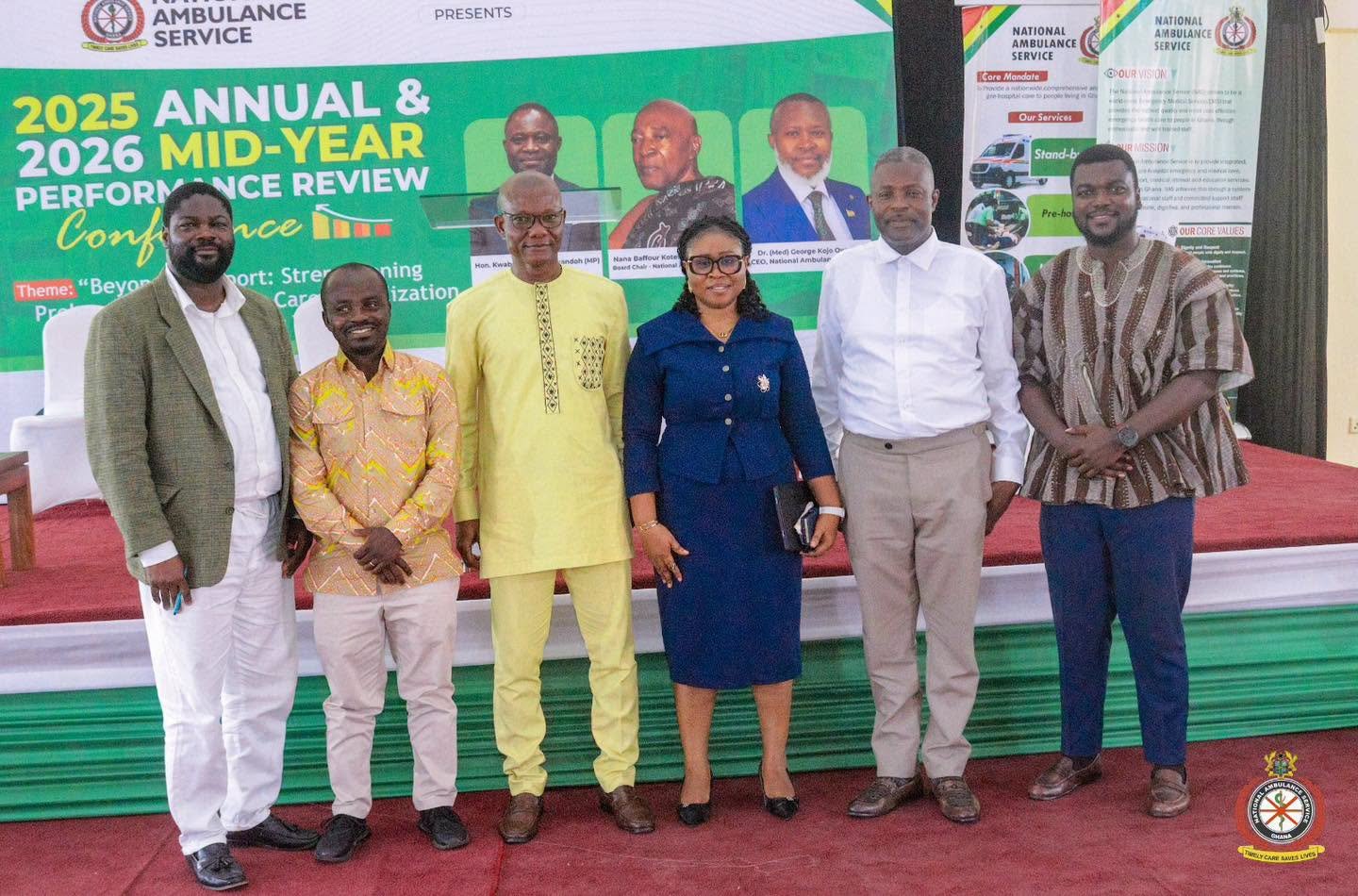
The Chief Executive Officer of the National Ambulance Service (NAS), Dr. (Med) George Kojo Owusu, has reaffirmed “Beyond Transport” as the Service’s operational mandate, emphasizing an enhanced commitment to delivering definitive pre-hospital emergency care and ensuring timely access to definitive treatment.
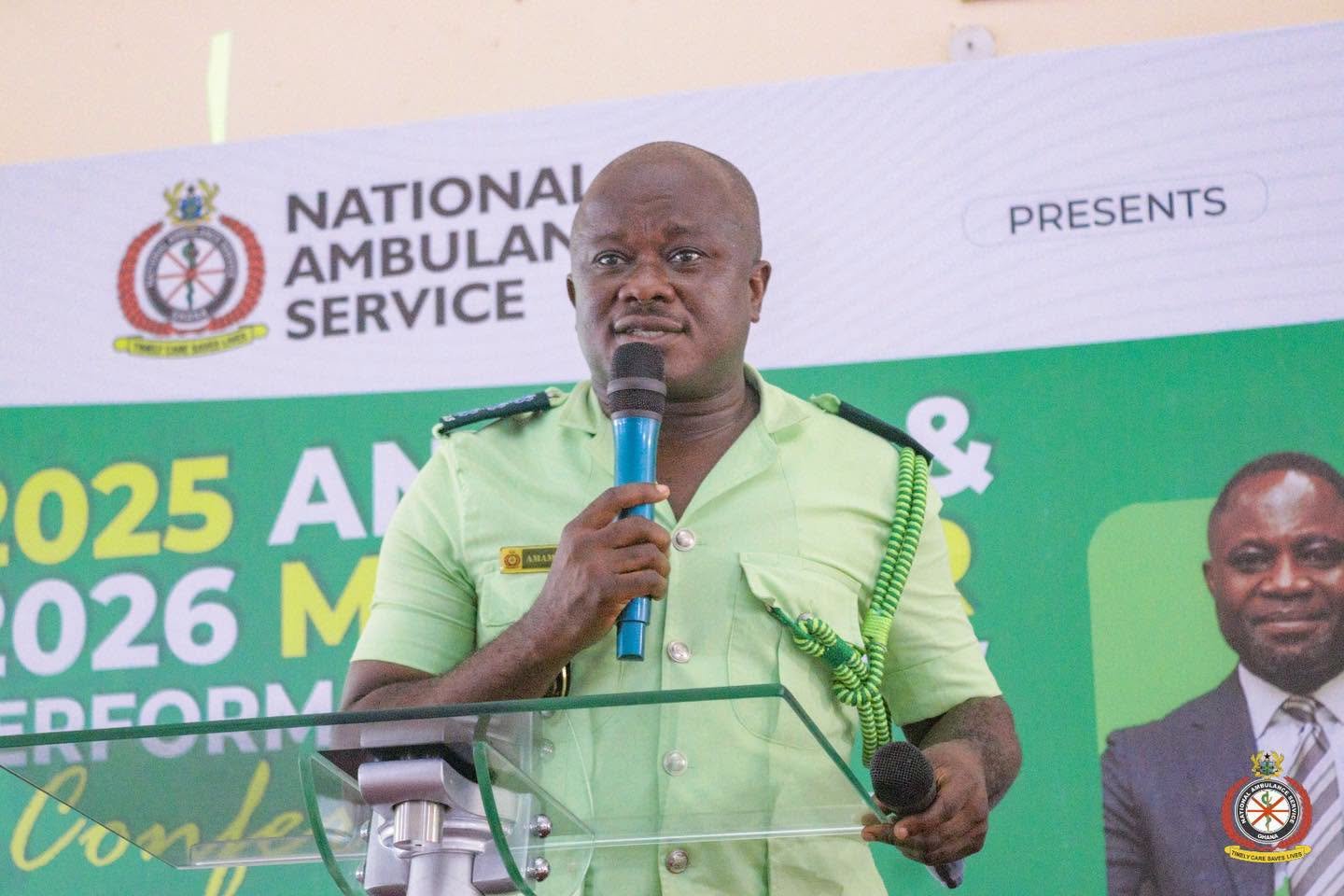
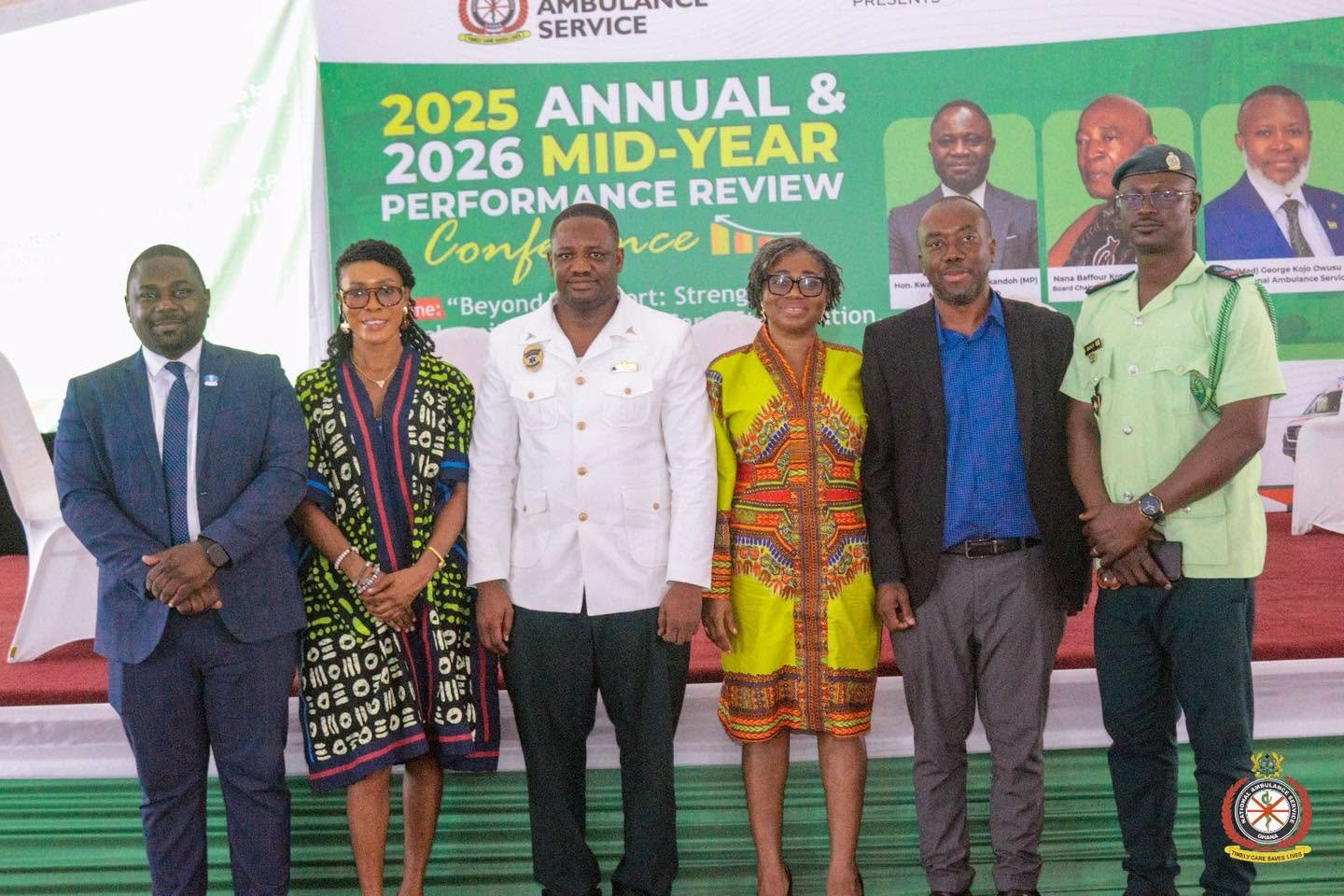
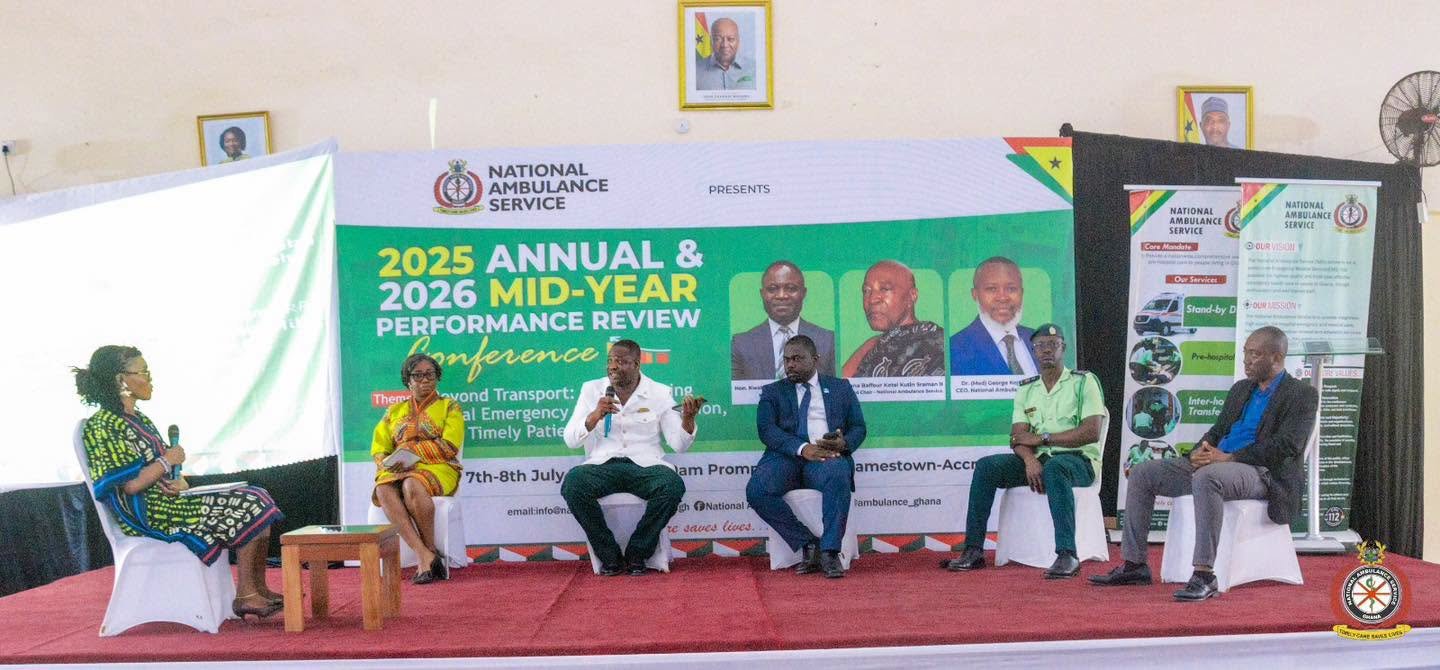
Dr. Owusu made the declaration while addressing top management and Regional Administrative Managers at the 2025 Annual and 2026 Mid-Year Performance Review Conference held at the Fire Academy and Training School in Accra.
According to the CEO, the National Ambulance Service has evolved significantly over the years and is now positioned to provide higher levels of pre-hospital care across the country.
“We have moved beyond the idea that we only drive patients from point A to point B. Today, we can confidently say that we deliver definitive pre-hospital care and ensure the timely transfer of patients to definitive care facilities,” he stated.
As part of efforts to strengthen professional standards and clinical excellence, Dr. Owusu disclosed that the Service is finalizing its accreditation process with the Ghana Tertiary Education Commission (GTEC) to transition Emergency Medical Technician (EMT) training from a certificate programme to fully accredited diploma and degree programmes.
He explained that the move will elevate the profession, improve clinical competencies, and enable the Service to recruit and train more Advanced EMTs. This, he said, will also support the expansion of the EMT scope of practice from basic to advanced levels, allowing personnel to deliver more sophisticated interventions at emergency scenes.
To sustain quality service delivery, Dr. Owusu announced plans to introduce mandatory EMT recertification every three years, complemented by continuous in-service training to ensure personnel remain abreast with global best practices in emergency medical care.
He further revealed that the Service will recruit and train additional personnel to support growing operational demands and reduce the workload on existing staff.
On healthcare referral coordination, the CEO noted that the Government has deployed the National Integrated Bed Management and Referral Coordination System, which provides real-time visibility of bed availability across health facilities.
According to him, the system will significantly improve referral coordination and help address the long-standing challenge of the “No Bed Syndrome.”
Dr. Owusu also disclosed that Standard Operating Procedures (SOPs) are being developed for all Emergency Dispatch Centres nationwide. The SOPs will cover key operational areas, including emergency call-taking, triage and prioritization, destination triage, and the provision of pre-arrival instructions to callers.
Touching on regulatory reforms, the CEO announced that the Ambulance Council, which will regulate both public and private ambulance services, ambulance practitioners, and EMT training institutions, will soon be operationalized to enforce standards and strengthen oversight within the emergency medical services sector.
He further revealed that plans are far advanced for the Government to procure new ambulance fleet and establish dedicated funding for fleet maintenance and personnel training.
Dr. Owusu described the initiative as a historic milestone, noting that the National Ambulance Service is expected to receive its own budget line in the next Government of Ghana budget.
“This will ensure greater predictability, sustainability, and long-term growth of the Service as we continue to expand access to quality pre-hospital emergency care across the country,” he said.