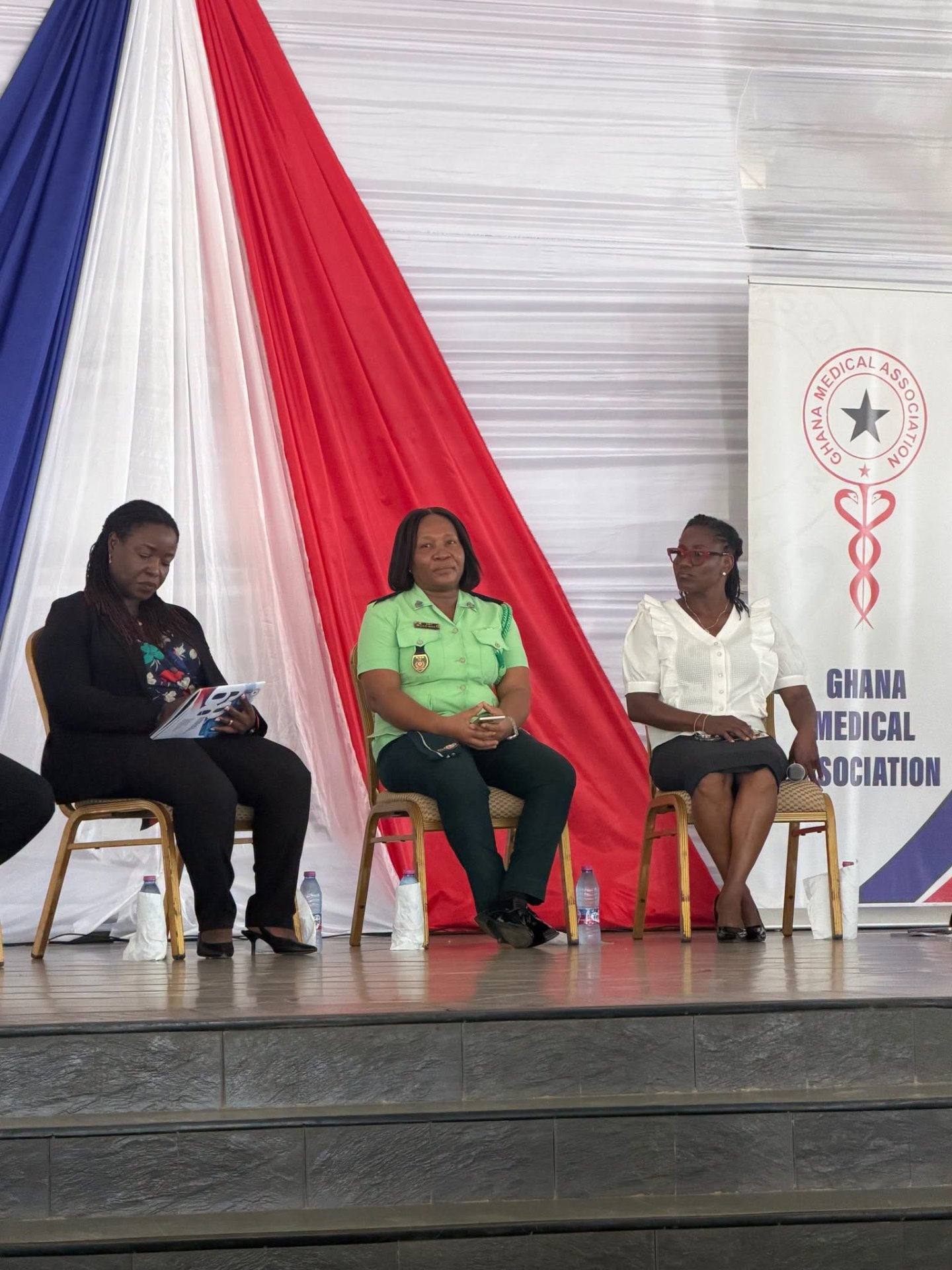
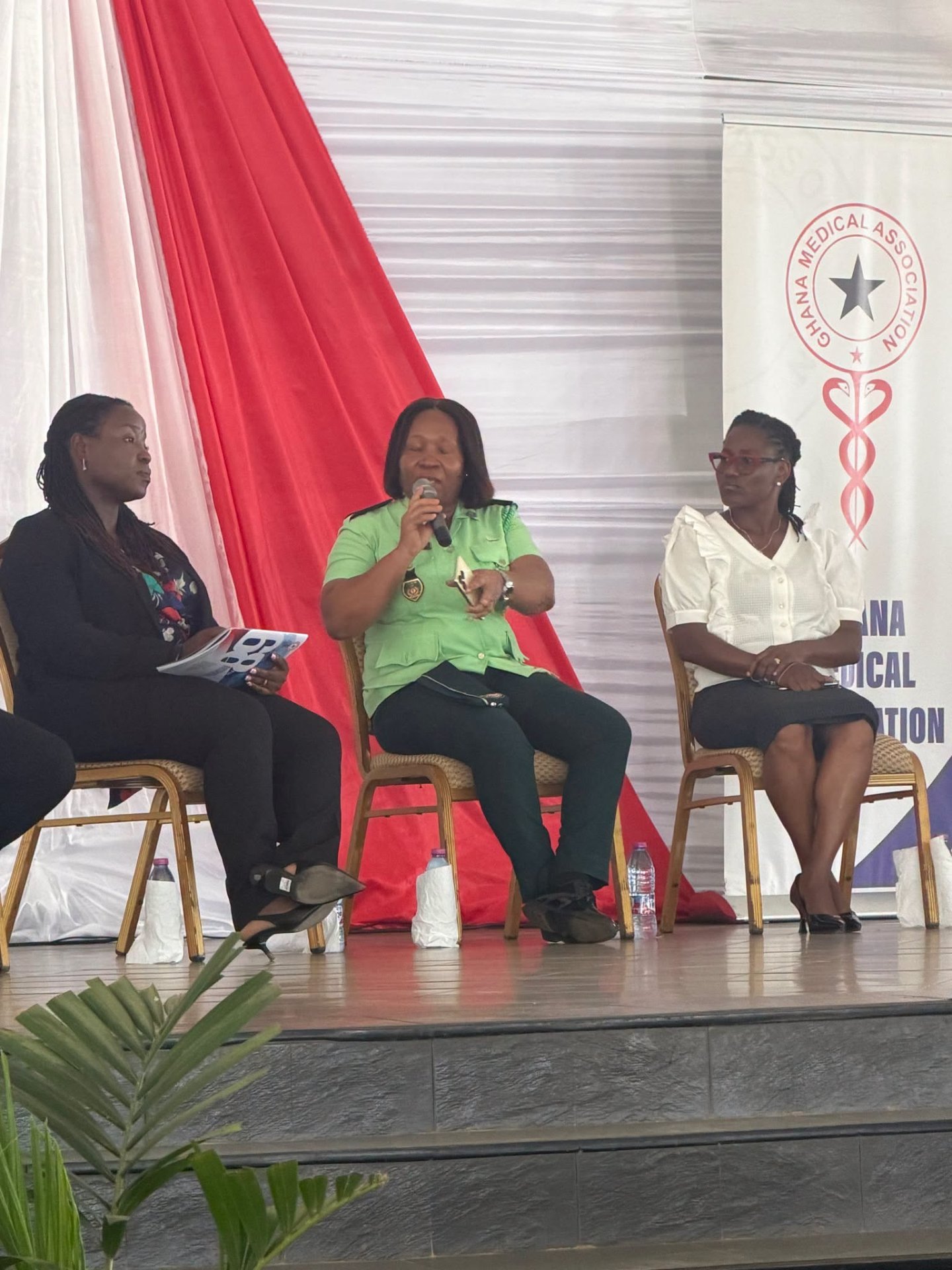
The National Ambulance Service (NAS) has called for stronger referral coordination, improved hospital accountability and clearly defined patient handover timelines to address delays at receiving health facilities and improve ambulance availability for emergency response. The call was made by DCAEMT Theodora Ayeki Sefa, Station Manager of the Pantang Ambulance Station, during a panel discussion at the 68th Annual General Conference of the Ghana Medical Association (GMA), held at Trinity Hall, Central University, Miotso. Contributing to discussions on challenges confronting pre-hospital emergency care, DCAEMT Sefa highlighted the difficulties Emergency Medical Technicians (EMTs) encounter when hospitals are unable to receive referred patients, leaving ambulances stranded at health facilities for extended periods while other emergencies await attention. She stressed that when an EMT is told there is “no bed”, the critical question should be whether the facility has the capacity to receive, stabilise and safely hand over the patient. This requires reliable information on available emergency and specialist services, critical care resources, alternative receiving facilities and confirmed acceptance by a responsible physician. On the role of technology in addressing these challenges, she highlighted the National Integrated Bed Management and Referral Coordination System (NIBMRCS) as an important intervention for improving visibility of hospital capacity and coordinating referrals. However, she emphasised that the platform must provide regularly updated information, verified acceptance by receiving physicians, clear escalation procedures and alternative communication channels when internet connectivity fails. NAS is also linking the NIBMRCS dispatch module with its Patient Information Management System (PIMS) to strengthen referral documentation and accountability by capturing critical timelines, including referral calls, hospital arrivals, patient handovers and refusals. A major recommendation from the discussion was the introduction of a clearly defined hospital handover timeframe, proposed at 30 minutes, within which receiving facilities should assume responsibility for emergency patients brought by ambulances. She further advocated recording and publishing hospitals’ median handover times monthly to promote accountability and identify facilities requiring improvement. DCAEMT Sefa maintained that reducing hospital handover delays is not merely an ambulance fleet issue but a broader health system responsibility. Ensuring that hospitals promptly receive and take over emergency patients would allow ambulances to return to service faster, strengthen emergency response capacity and improve access to timely pre-hospital care. NAS reaffirmed the importance of stronger collaboration between ambulance services and receiving health facilities in building a more coordinated, responsive and efficient emergency healthcare system.