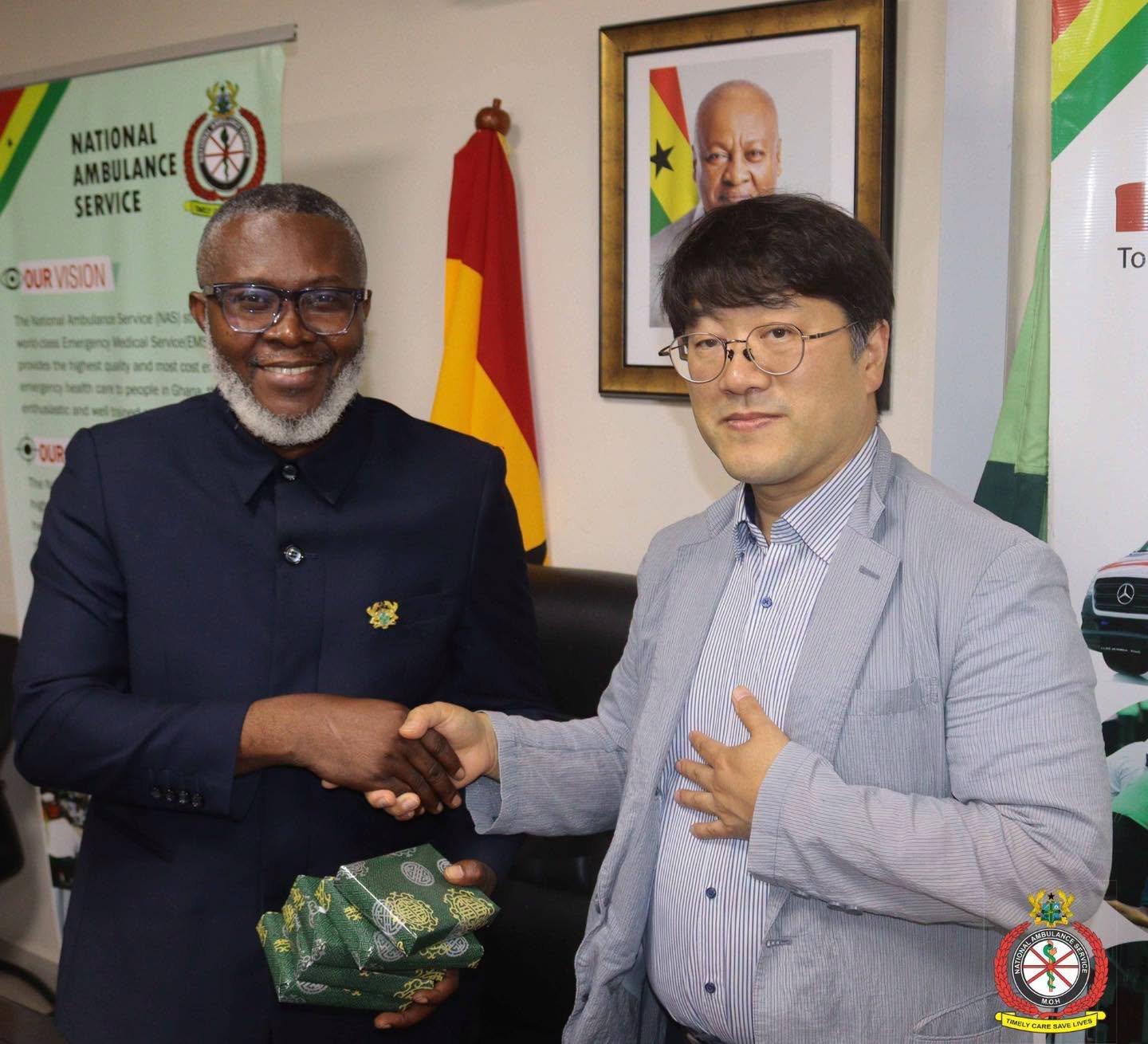
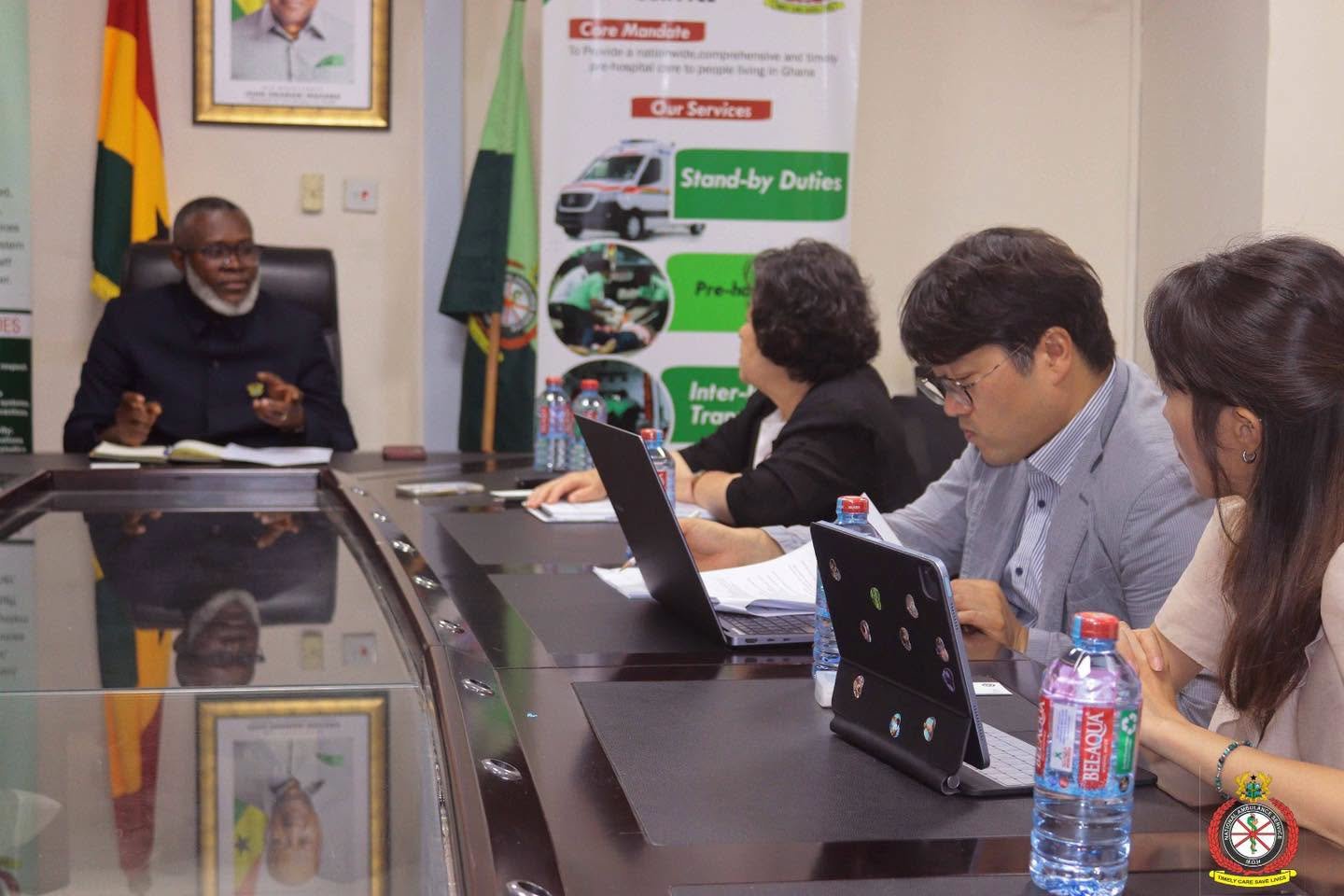
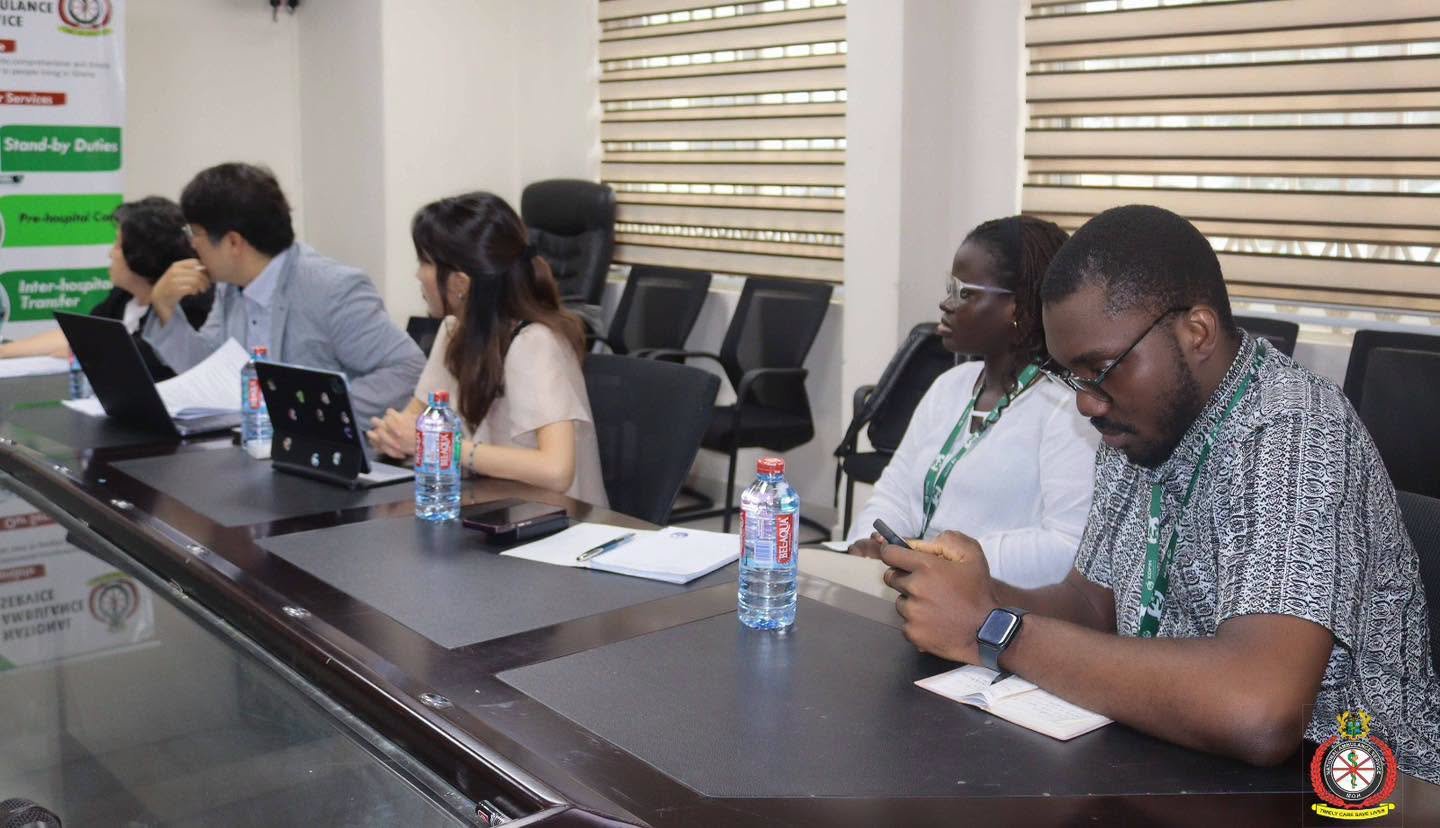
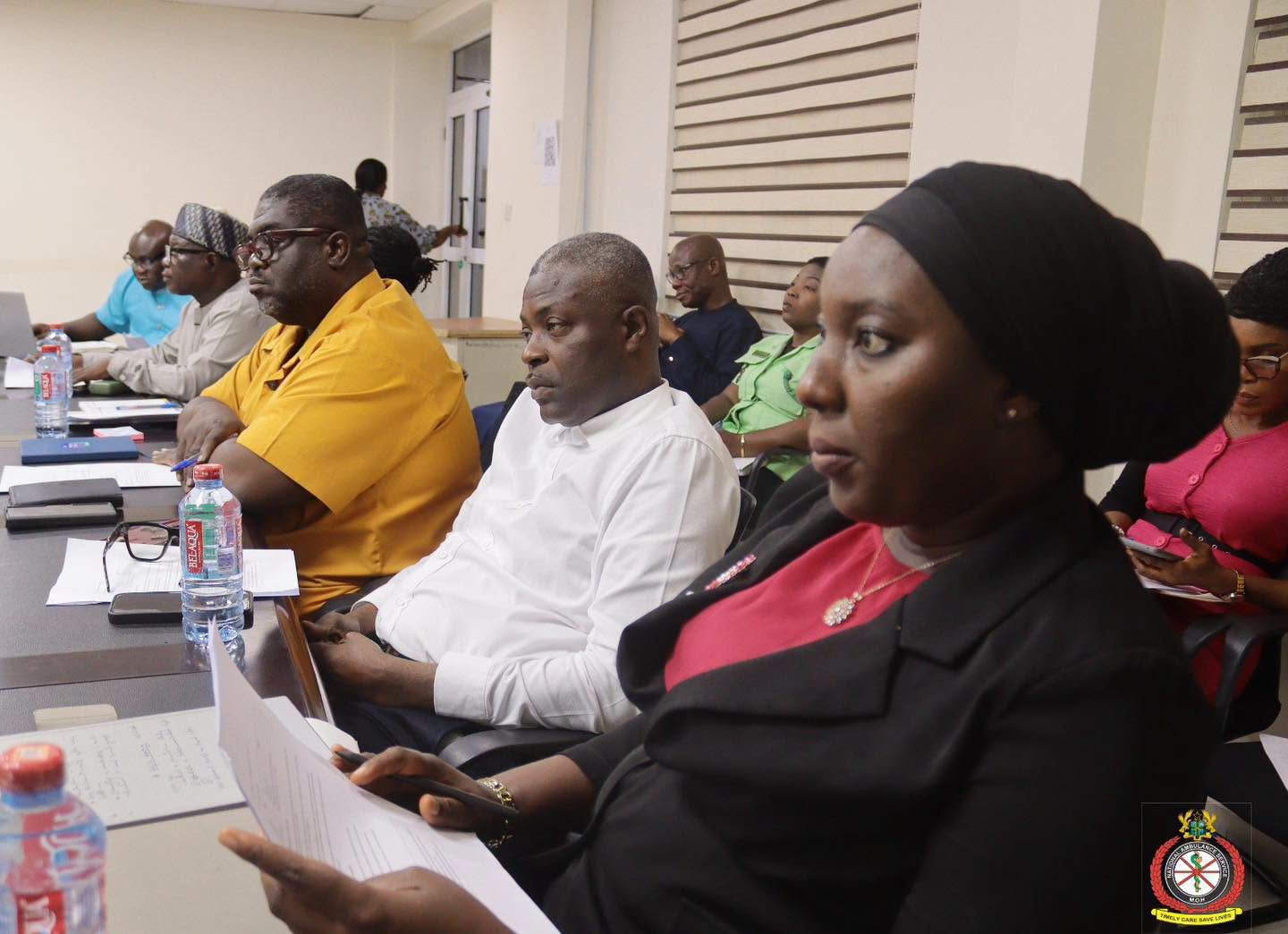
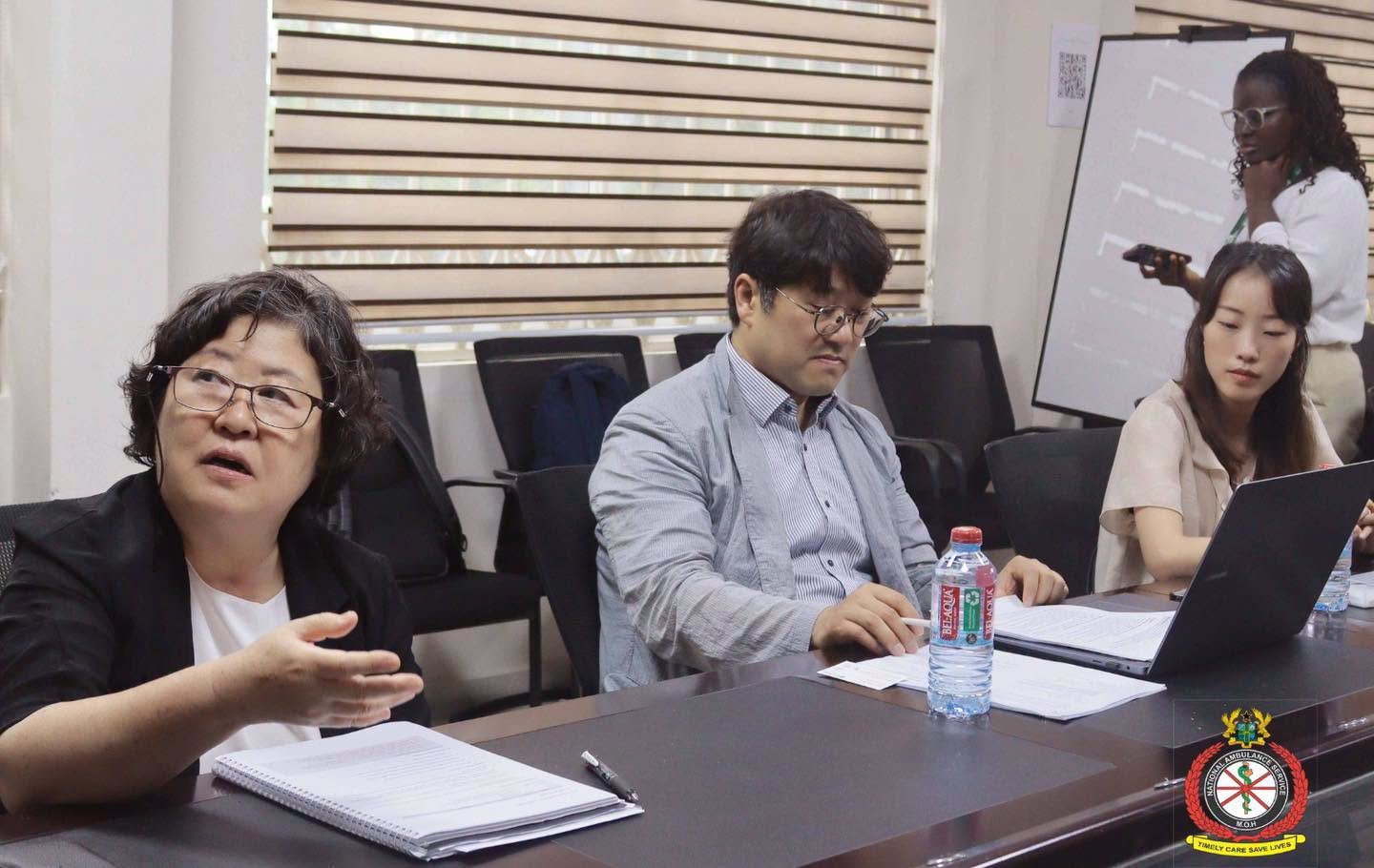
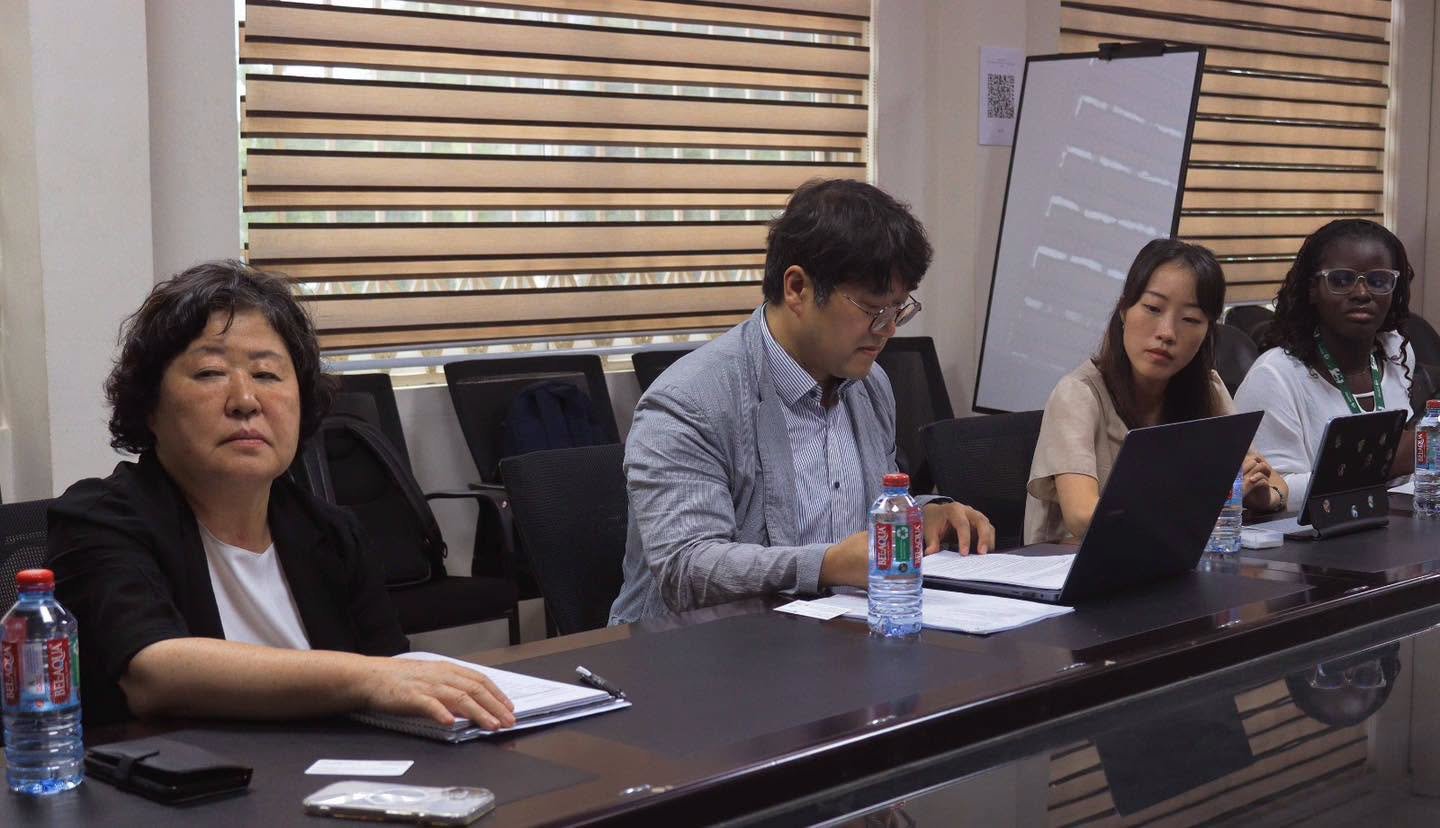
A delegation from the Korean Foundation for International Healthcare (KOFIH) has for the second time called on the Management of NAS as part of a formative study for the proposed Emergency Medical Service (EMS)-Centred Health System Project.
The meeting, held at the National Ambulance Service Headquarters in Accra, forms part of KOFIH's efforts to gather relevant information to support the implementation of the project. The study seeks to assess Ghana's emergency medical service landscape and identify opportunities for strengthening the country's EMS system.
As part of the exercise, KOFIH is engaging key stakeholders, including the National Ambulance Service, to conduct field assessments. The Foundation has selected the Oti and Volta regions for the study and is particularly interested in understanding the Service's operations, achievements, challenges, training systems, emergency response mechanisms, and future priorities.
During the engagement, a member of the KOFIH delegation, Madam Jong In Lee, sought clarification on the training structure for Emergency Medical Technicians (EMTs), asking about the duration of training programmes and the certification process.
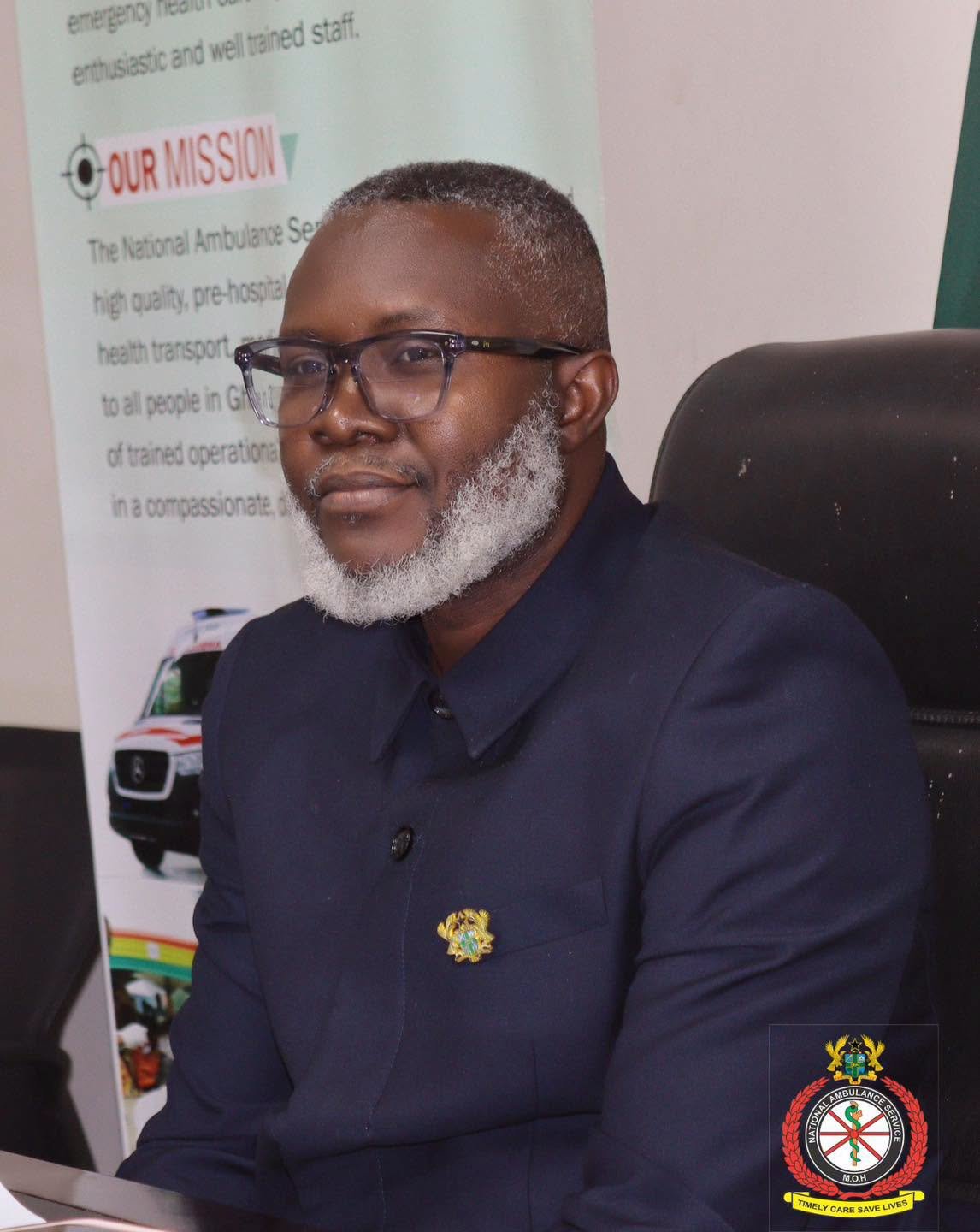
Responding to the inquiries, the Chief Executive Officer of the National Ambulance Service, Dr. (Med) George Kojo Owusu, welcomed the delegation and highlighted the Service's achievements in emergency medical training.
He explained that the Service operates the Paramedic and Emergency Care Training School (PECTS) in the Ashanti Region, where more than 3,000 Emergency Medical Technicians have been trained for deployment across the country.
According to Dr. Owusu, Basic EMTs undergo one year of training in Basic Life Support (BLS), while Advanced EMTs complete a two-year programme in Advanced Life Support (ALS). He disclosed that the Service currently has 2,558 Basic EMTs, 222 Intermediate EMTs, and 425 Advanced EMTs.
He further noted that EMTs receive certificates upon successful completion of their training, with mandatory recertification conducted every three years. In addition, the Service regularly organises in-service capacity-building programmes for its personnel and has applied to the Ghana Tertiary Education Commission (GTEC) for accreditation of its training institution.
Speaking on behalf of KOFIH, Mr. York Hym expressed the Foundation's commitment to supporting the development of emergency medical education in Ghana to meet global standards. He also indicated KOFIH's readiness to collaborate with the National Ambulance Service in achieving this objective.
The KOFIH delegation is currently undertaking a three-day stakeholder workshop, during which it will present its preliminary findings, observations, and recommendations to the Ministry of Health for review and feedback as part of the ongoing formative study.